
Child language development is the gradual process through which children learn to understand and use sounds, words, sentences, and conversation. It follows recognizable milestones, but the pace and order vary: children may develop different communication skills at different times, and milestone ages are guides rather than diagnostic tests. From early responses to voices and babbling to first words, expanding vocabulary, and more complex sentences, these changes matter because communication supports learning, relationships, and participation in daily life. The American Speech-Language-Hearing Association (ASHA) estimates that roughly 8% of young children have a language disorder, underscoring the value of noticing development and seeking advice when concerns arise.
Milestones define child language development
A developmental milestone is a skill that most children can do by a particular age. The U.S. Centers for Disease Control and Prevention (CDC) describes milestones as practical markers for tracking development, not as substitutes for standardized screening or professional assessment. Language development includes both receptive language—understanding words and messages—and expressive language—communicating through sounds, words, signs, or other systems. Speech, which concerns the production of sounds, is related but not identical to language.
Milestone checklists can help families and clinicians start a conversation, but a child’s full communication profile matters more than any single behavior. Children may communicate effectively with spoken language, sign language, or augmentative and alternative communication (AAC). A multilingual child may distribute vocabulary across languages; assessing only one language can therefore give an incomplete picture. Context, opportunities to communicate, hearing, health, and individual differences all affect what a child demonstrates.
Receptive and expressive language
Receptive language refers to understanding communication, such as recognizing familiar words or following directions. Expressive language refers to conveying meaning, including through gestures, signs, spoken words, or AAC. These abilities develop together but need not advance at the same rate. For example, a toddler may understand many more words than they can say aloud.
Milestones are guides, not pass-or-fail tests
The CDC’s revised milestone checklists identify skills that at least 75% of children are expected to show by the listed age. This threshold is intended to support developmental monitoring and timely discussion; it does not mean that every child who has not yet reached a milestone has a disorder. If a child loses a skill they previously had, however, CDC guidance is to act promptly and discuss the change with a health professional.
Early communication milestones build the foundation
Before children use recognizable words, they learn through interaction: listening to voices, watching faces, taking turns with sounds, and communicating with gestures. These early skills connect social attention and language learning. Talking, singing, reading, and responding to a baby’s attempts to communicate give children opportunities to associate sounds and gestures with people, actions, and objects.
Birth to 6 months: listening and vocal play
In the first months, babies commonly respond to familiar voices and begin making cooing or other vowel-like sounds. They may turn toward sounds, watch a caregiver’s face, and take part in early back-and-forth exchanges. These behaviors are not words, but they are part of the development of attention, listening, and vocal communication. ASHA’s communication milestones describe early vocal play and increasing responsiveness to sounds during this period.
6 to 12 months: babbling, gestures, and shared attention
Babbling becomes more speech-like as babies repeat combinations such as “bababa” or “mamama.” Many also use gestures, such as reaching or waving, and increasingly respond to their names or familiar words. Joint attention—sharing focus on an object or event with another person—helps connect social interaction to learning what words mean. Near the end of the first year, some children say a first meaningful word, although timing varies.
12 to 18 months: first words and growing understanding
During the second year, many children use meaningful words for familiar people, objects, or routines and understand more language than they produce. Communication may combine words with pointing, showing, or other gestures. A child’s first words may not sound like adult pronunciations; what matters is whether the child uses a sound or word consistently to communicate a particular meaning.
Vocabulary and sentences expand during toddlerhood
As children move through toddlerhood, they typically become more efficient at learning words and combining them to express relationships. The changes are not simply a larger word list: children also learn how words work in phrases, how to ask for information, and how to adjust communication to a listener. Differences in the exact pace are common, so vocabulary counts should be interpreted alongside understanding, gestures, play, and everyday communication.
18 to 24 months: vocabulary growth and word combinations
Many children begin combining two words to express ideas such as “more juice” or “Daddy go.” These combinations show emerging knowledge of how words relate, even when grammatical endings are absent. Vocabulary growth can vary considerably across children. A frequently cited research finding is that around 18 months, children may experience a “vocabulary spurt,” but this pattern is not universal and should not be treated as a required milestone for every child.
2 to 3 years: longer phrases and clearer communication
In the preschool period, children generally begin using longer phrases, asking questions, and talking about what is happening. They learn grammatical patterns gradually, so errors such as overgeneralizing a rule can be a normal part of learning. Speech clarity also improves over time, although unfamiliar listeners may still find some young children difficult to understand. The CDC’s 30-month checklist, for example, includes using two or more words together with an action word, such as “doggie run.”
3 to 5 years: grammar, storytelling, and conversation
Between ages three and five, children commonly use more complex sentences, describe events, tell simple stories, and take part in longer conversations. They continue learning vocabulary and grammar through play, shared reading, questions, and interactions with adults and other children. ASHA’s communication milestones provide age-banded examples of these developing skills, while emphasizing that milestone lists do not replace an evaluation when concerns arise.
Language differences and development are shaped by context
Children do not all follow an identical path. Language experience, cultural expectations, opportunities for interaction, hearing, and developmental conditions can influence what a child understands and how they communicate. Distinguishing expected variation from a possible delay requires attention to the child’s communication across settings and, for multilingual children, across all languages they use.
Multilingual development
Learning more than one language does not, by itself, cause a language disorder. A multilingual child may know particular words in one language and other words in another; considering vocabulary and communication across languages offers a more complete view. ASHA recommends that assessment take a child’s languages and language-learning experiences into account. Families can speak with children in the languages they know best, providing rich and natural interaction.
Speech, language, hearing, and communication are connected
A child may have difficulty producing speech sounds while understanding and using language well, or may have difficulty understanding and expressing language. Hearing also matters because children learn spoken language partly by listening to speech. When there is concern about a child’s response to sound or language progress, a healthcare professional can discuss whether hearing assessment and speech-language evaluation are appropriate.
Monitoring milestones helps families act early
Developmental monitoring is the ongoing observation of a child’s skills and discussion of progress with caregivers and professionals. Developmental screening uses a validated tool at specified ages or when concerns arise. The American Academy of Pediatrics recommends general developmental screening at 9, 18, and 30 months, and autism-specific screening at 18 and 24 months, as part of routine care. Screening identifies children who may benefit from further evaluation; it does not itself diagnose a language disorder.
When to seek advice
Caregivers should raise concerns with a pediatrician or other qualified professional if a child is not meeting expected communication milestones, is difficult to engage in communication, or has lost previously acquired skills. Families do not need to wait for a particular age or for a concern to become severe before asking for guidance. A professional may review developmental history, communication in everyday settings, hearing, and relevant languages, and may recommend a speech-language pathologist or other specialist.
Everyday ways to support communication
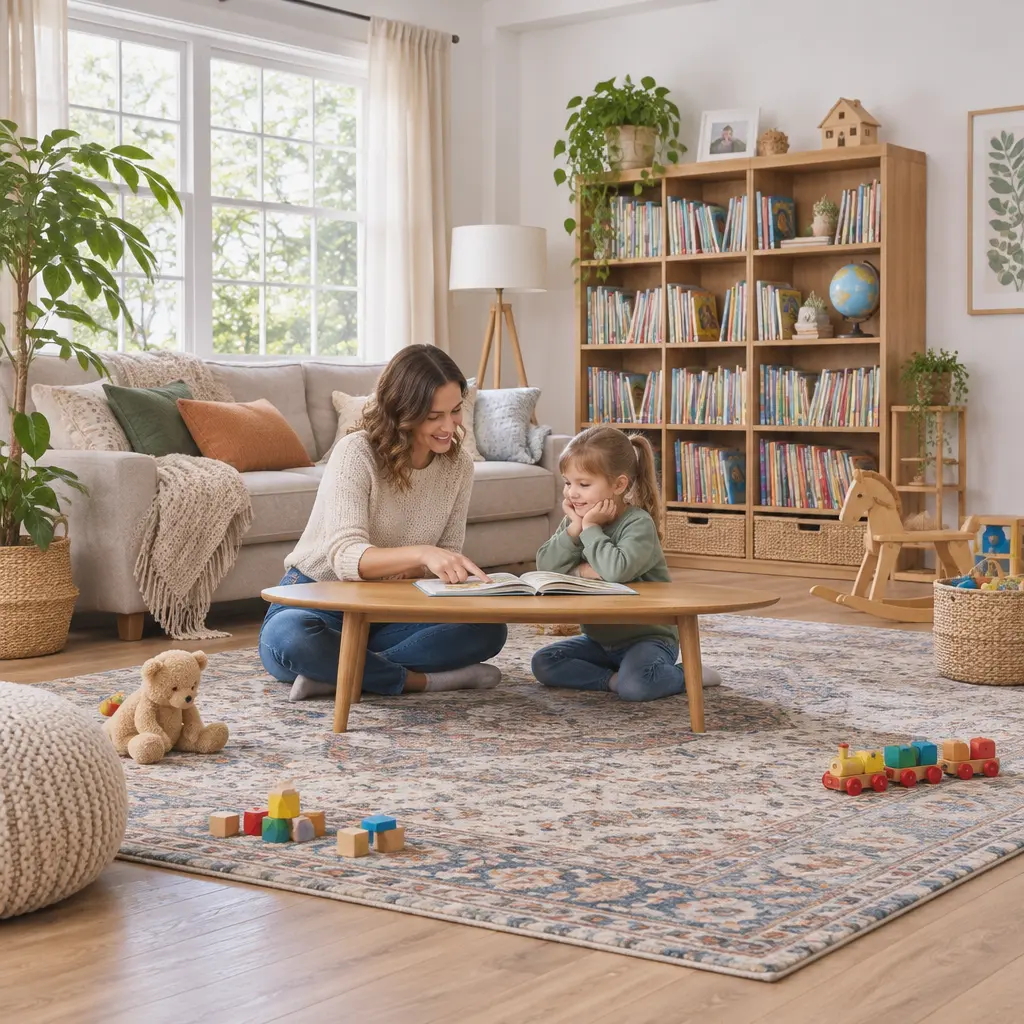
Responsive interaction can make daily routines useful opportunities for language learning. Adults can follow a child’s interests, pause to allow a response, name what the child is looking at, expand a child’s words into slightly longer phrases, and share books and songs. The goal is not to test or pressure a child, but to make communication warm, frequent, and meaningful. These practices complement—but do not replace—professional support when a developmental concern is present.
Conclusion: child language milestones guide support
Child language development progresses from early listening, vocal play, and gestures to first words, word combinations, and increasingly complex conversation. Receptive and expressive skills, multilingual experience, and individual variation all shape how milestones appear. Because milestone checklists are guides rather than diagnoses, families can use them to track progress, discuss concerns during routine developmental screening, and seek evaluation when appropriate. For further guidance, review CDC and ASHA milestone resources and bring specific observations or questions to a child’s healthcare professional.
Sources: Centers for Disease Control and Prevention, Developmental Milestones, https://www.cdc.gov/act-early/milestones/; Centers for Disease Control and Prevention, Milestone Checklists, https://www.cdc.gov/act-early/milestones/; American Speech-Language-Hearing Association, Communication Milestones: Birth to 1 Year, https://www.asha.org/public/developmental-milestones/communication-milestones-birth-to-1-year/; American Speech-Language-Hearing Association, Communication Milestones: 1 to 2 Years, https://www.asha.org/public/developmental-milestones/communication-milestones-1-to-2-years/; American Speech-Language-Hearing Association, Communication Milestones: 2 to 3 Years, https://www.asha.org/public/developmental-milestones/communication-milestones-2-to-3-years/; American Speech-Language-Hearing Association, Communication Milestones: 3 to 4 Years, https://www.asha.org/public/developmental-milestones/communication-milestones-3-to-4-years/; American Speech-Language-Hearing Association, Communication Milestones: 4 to 5 Years, https://www.asha.org/public/developmental-milestones/communication-milestones-4-to-5-years/; American Academy of Pediatrics, “Promoting Optimal Development: Identifying Infants and Young Children With Developmental Disorders Through Developmental Surveillance and Screening,” Pediatrics, 2020, https://doi.org/10.1542/peds.2019-3449.