
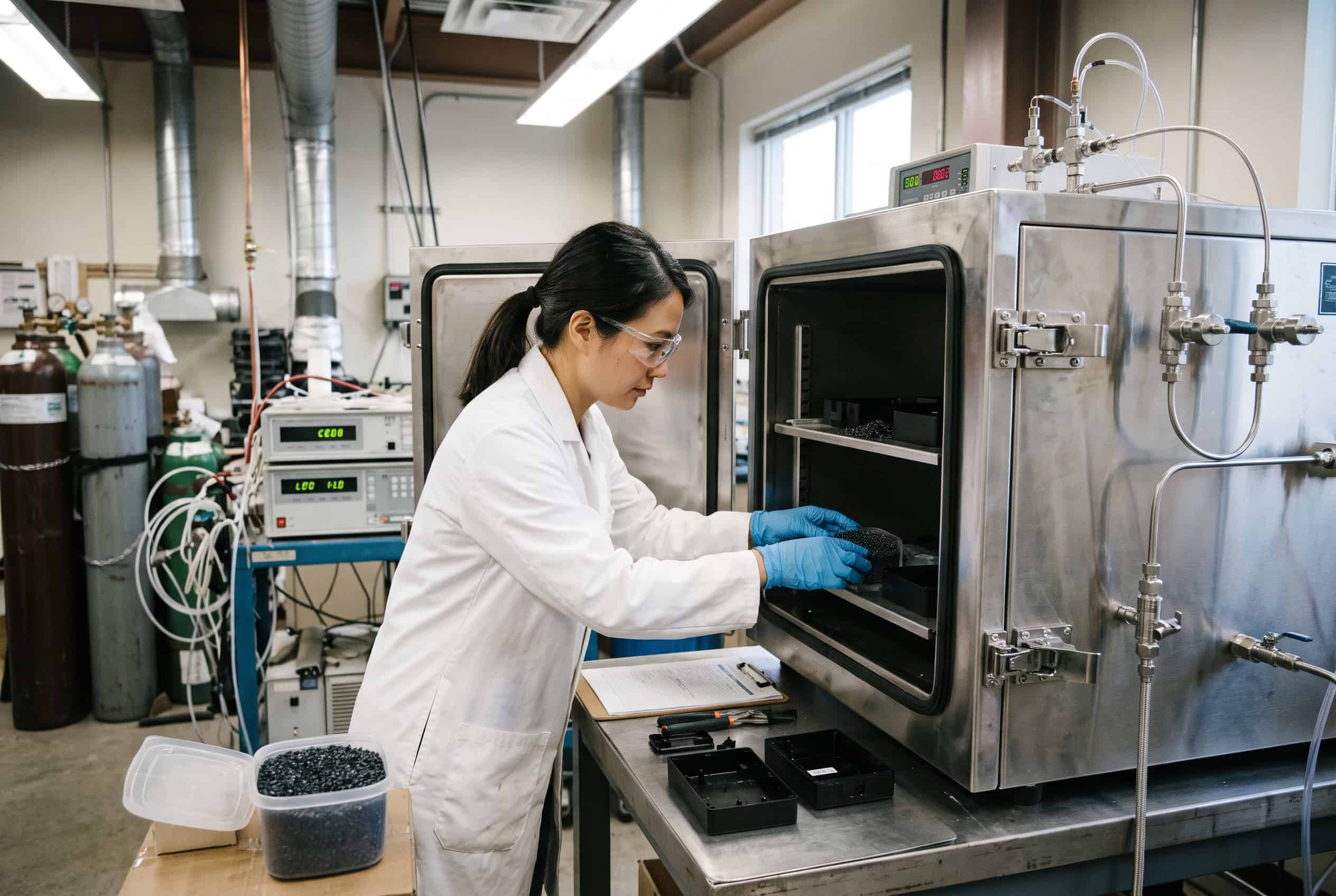
As global manufacturers accelerate their shift toward circular sustainability and compact electronic designs, raw material formulations are becoming far more complex. Post consumer recycled plastics, lightweight composite moldings, and encapsulated electronic housings offer major environmental and weight advantages, yet they also introduce unpredictable chemical outgassing risks. A VOC test is a precise laboratory evaluation that extracts and quantifies airborne organic chemicals released from solid polymers and finished assemblies when exposed to simulated operational heat and environmental aging. Conducting rigorous emission screening enables engineering teams to prevent invisible vapor contamination from ruining delicate hardware or compromising indoor air safety.
Unlike virgin resins produced under uniform petrochemical controls, recycled polymers frequently carry legacy additives, ink remnants, and thermal degradation byproducts from previous lifecycles. Without independent laboratory verification, these hidden volatiles can vaporize inside tightly sealed equipment enclosures or heated transport cabins, causing sudden performance failures and regulatory compliance breaches.
Laboratory Techniques for Profiling Polymer Outgassing
Evaluating complex solid assemblies requires specialized extraction equipment capable of capturing trace vapors without introducing outside laboratory interference.
- Dynamic Environmental Chamber Testing: Full components or representative polymer plaques are positioned inside inert stainless steel chambers maintained at strictly regulated temperature, relative humidity, and purified airflow rates. Air samples collected over scheduled intervals reveal both initial emission spikes and long term decay behavior.
- Thermal Desorption Mass Spectrometry: Analysts heat small solid material cuttings inside clean glass tubes to drive out volatile and semi volatile organic molecules into a cold trap. The concentrated vapors are then analyzed via mass spectrometry to identify exact molecular structures down to parts per billion sensitivity.
- Gravimetric and Optical Fogging Analysis: Heated polymer specimens are placed beneath chilled glass plates or aluminum foil discs to simulate warm sunlight striking dark plastic housings. Weighing the condensed film or measuring light reflectance reduction quantifies exactly how much heavy organic residue deposits onto adjacent surfaces.
High Precision Sectors Dependent on Outgassing Control
Strict management of airborne molecular emissions safeguards manufacturing yields and operational safety across multiple advanced industries.
- Consumer and Industrial Electronics: Optical sensors, camera modules, and sealed electrical relays operate inside compact plastic casings that generate steady internal heat. Qualifying housing polymers, potting resins, and thermal pads prevents volatile siloxanes and organic acids from fogging lenses or forming insulating deposits on metallic contact points.
- Recycled Resin and Bioplastic Compounding: Polymer compounders supplying regional molding plants rely on batch level emission checks to verify that reprocessed polypropylene, polycarbonate, and acrylonitrile butadiene styrene pellets meet the same strict odor and safety benchmarks as virgin grades.
- Cleanroom Construction and Semiconductor Tooling: Microchip fabrication facilities enforce ultra strict limits on airborne molecular contamination. Screening cleanroom wall panels, flooring adhesives, air filter sealants, and wafer handling plastics ensures organic vapors never settle onto exposed silicon circuits.
- Commercial Mobility and Marine Vessels: Enclosed crew quarters, bus interiors, and vessel cabins operating in humid tropical climates experience intense solar heat buildup. Validating molded thermoplastic panels and foam insulation ensures passengers and operators breathe clean air throughout extended journeys.
Guaranteeing low emission material performance is vital for sustaining product reliability, protecting human health, and meeting strict global environmental standards. By integrating a certified voc test through Alstesting Voc testing services in Malaysia, polymer processors and electronics manufacturers secure dependable, accredited analytical evidence to qualify sustainable materials for international markets.
Frequently Asked Questions (FAQ)
How do outgassed siloxanes damage electrical switches and optical sensors?
Silicone based seals, lubricants, and potting adhesives can slowly release volatile cyclic siloxane vapors when warmed inside sealed electronic enclosures. When these vapors encounter microscopic electrical arcs on relay contacts, they oxidize into hard, non conductive silicon dioxide deposits that cause intermittent switching failures, while simultaneously creating hazy residues on nearby camera lenses.
Why do recycled plastics exhibit higher emission variability than virgin resins?
Post consumer and post industrial plastic streams originate from diverse sources containing mixed pigments, flame retardants, fragrances, and packaging inks. Repeated melting during mechanical recycling also breaks long polymer chains into smaller, more volatile fragments, making consistent laboratory screening essential for every production batch.
What environmental factors accelerate chemical outgassing in sealed plastic housings?
Elevated internal operating temperatures, direct ultraviolet light exposure, low ambient air exchange, and high relative humidity all accelerate chemical evaporation. Heat increases the kinetic energy of trapped additives so they migrate faster to the polymer surface, while moisture can trigger hydrolytic breakdown in certain polyurethanes and polyesters, releasing fresh volatile byproducts.