
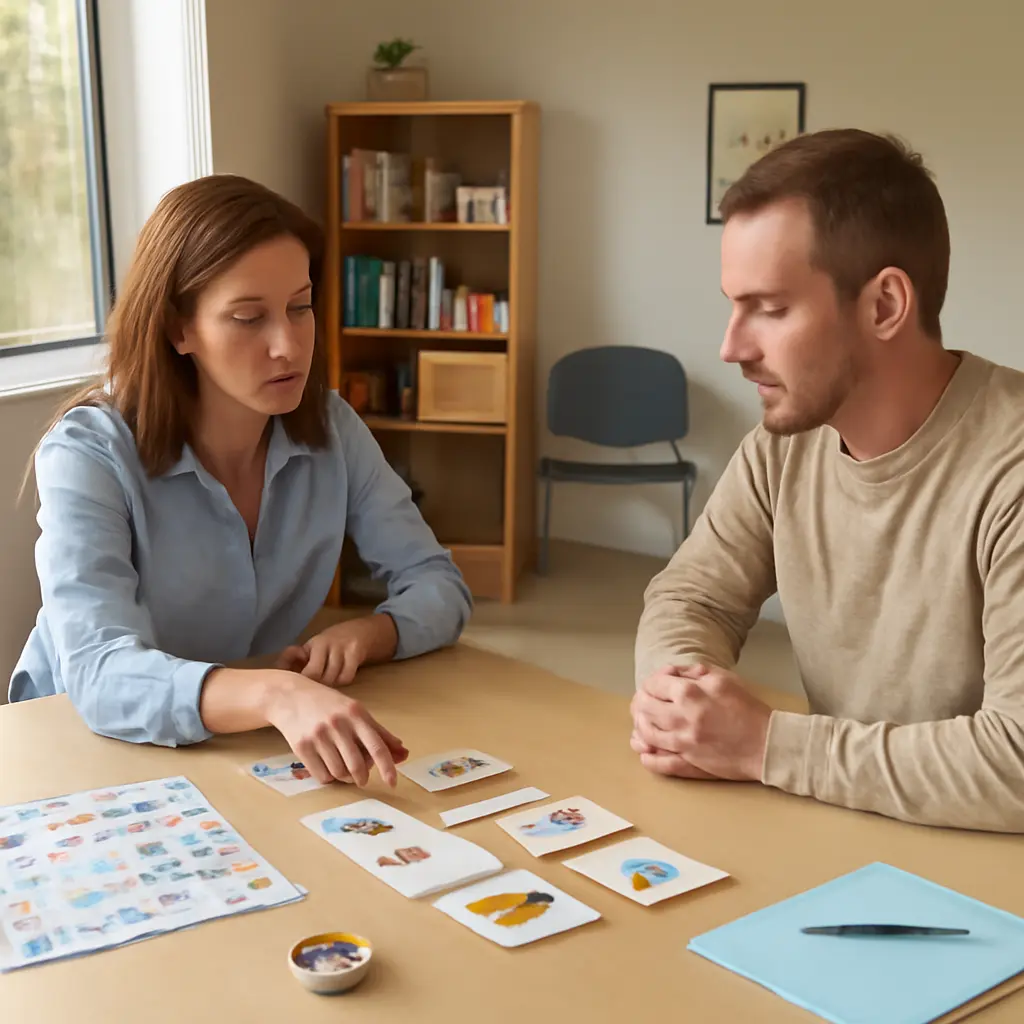
Aphasia is an acquired language disorder that can affect speaking, understanding, reading, and writing after brain damage, most often from stroke. When language stops working, the difficulty is not simply “finding the right word”: damage can disrupt several connected processes used to understand and produce language. Recovery may draw on the brain’s changing networks, speech-language therapy, and communication support from family and clinicians. The National Aphasia Association estimates that more than two million people in the United States live with aphasia, while the American Heart Association reports that roughly one in three stroke survivors experiences it. Understanding aphasia’s types, causes, assessment, recovery, and practical supports helps explain both what changes and how people can participate in communication again.
Aphasia and the disruption of language
Aphasia is an impairment of language caused by injury to the brain’s language networks. The American Speech-Language-Hearing Association (ASHA) describes it as a communication disorder that can affect speaking, listening, reading, and writing; it does not, by itself, mean that a person has lost intelligence. How aphasia appears depends on which language processes and brain regions are affected, the extent of injury, and the person’s health and communication history.
The term includes several related profiles, rather than one uniform condition. A person may speak fluently but have trouble understanding or selecting meaningful words, speak in short and effortful phrases, or experience difficulties across both comprehension and expression. Some people have relatively isolated problems, such as difficulty naming objects, while others have broader language impairment. These categories help clinicians describe patterns, but they do not fully capture an individual’s abilities or everyday experience.
What changes when language stops working
Language involves multiple interacting abilities: retrieving words, arranging them into sentences, interpreting what others say, and connecting written symbols with meaning. Aphasia can interrupt one or several of these processes. For example, a person may know what they want to say but be unable to retrieve the word, or may hear a sentence clearly yet struggle to understand its meaning. Speech, language, and cognition can interact, so assessment is needed to distinguish language difficulties from hearing loss, attention problems, or other effects of brain injury.
Aphasia is not a loss of intelligence
A person with aphasia may have difficulty expressing knowledge through speech or writing even when their reasoning and understanding of a situation remain intact. Communication partners can mistakenly interpret pauses, simplified sentences, or word substitutions as confusion. Allowing time, offering written or visual choices, and checking what the person means can reveal abilities that conversation alone may conceal.
Aphasia types reveal different language patterns
Clinicians describe aphasia patterns by examining fluency, comprehension, repetition, naming, reading, and writing. The National Institute on Deafness and Other Communication Disorders (NIDCD) notes that aphasia can range from mild word-finding difficulty to severe impairment across communication. Traditional labels are useful shorthand, but real-world profiles often overlap and can change as a person recovers.
Broca’s aphasia and effortful speech
Broca’s aphasia, often called nonfluent aphasia, is commonly associated with slow, effortful speech and short phrases. Comprehension may be stronger than spoken expression, though understanding complex grammar can also be difficult. A person might communicate key words but omit connecting words, making speech sound fragmented. This pattern can be frustrating because the person may recognize the communication problem while struggling to repair it.
Wernicke’s aphasia and comprehension
Wernicke’s aphasia, often described as fluent aphasia, may involve speech that flows easily but includes incorrect or invented words, alongside substantial difficulty understanding spoken language. Because speech can sound fluent, listeners may not immediately recognize the extent of the language impairment. Simple wording, gestures, pictures, and confirmation of understanding can make interactions more accessible.
Global, anomic, and other profiles
Global aphasia involves severe difficulty with both expression and comprehension and is often associated with extensive language-network injury. Anomic aphasia is marked particularly by difficulty retrieving names or specific words, although other language skills may be comparatively preserved. Other classifications include conduction and transcortical aphasias, distinguished in part by how repetition and other language abilities are affected. These labels describe patterns rather than fixed outcomes; a speech-language pathologist evaluates the whole communication profile.
Brain injury causes aphasia and shapes its course
Aphasia results from damage to brain regions and connections that support language. Stroke is the leading cause, but traumatic brain injury, brain tumors, infection, and some progressive neurological diseases can also produce language impairment. The cause and timing matter: sudden language changes require urgent medical attention because they may signal stroke, while gradually worsening language can have a different neurological explanation.
Stroke-related aphasia
A stroke can interrupt blood flow to brain tissue or cause bleeding, injuring language networks directly or affecting connections between them. The American Stroke Association has reported that about one-third of stroke survivors experience aphasia. The exact symptoms depend on the location and extent of injury, not simply on whether a stroke affected the left or right side of the brain. Sudden trouble speaking, understanding, reading, or writing—especially with facial drooping, weakness, or vision changes—should be treated as an emergency.
Progressive language disorders
Primary progressive aphasia (PPA) is a neurological syndrome in which language difficulties gradually worsen over time, commonly due to neurodegenerative disease. Unlike aphasia after a sudden stroke, PPA develops progressively, and the first prominent difficulties may involve word retrieval, sentence construction, or understanding word meanings. Assessment helps distinguish PPA from other causes of cognitive or communication change and supports planning for communication needs as they evolve.
Aphasia assessment connects symptoms to communication goals
Assessment identifies what a person can do, where communication breaks down, and which supports may help. A speech-language pathologist may examine naming, repetition, comprehension, conversation, reading, and writing, while considering hearing, vision, motor speech, cognition, languages spoken, and everyday priorities. Results guide treatment and provide a baseline for tracking change; a single test score cannot represent every situation in which a person communicates.
Testing language in real-life contexts
Formal tasks can show whether a person recognizes words, follows instructions, or produces sentences, while conversation and functional activities reveal how those skills work in daily life. Clinicians may ask about communicating with family, managing appointments, returning to work, or participating in community activities. Testing should account for a person’s preferred language and cultural background, since language experience can affect performance and treatment priorities.
Communication access is part of assessment
A person’s communication should not be judged solely by how quickly they answer spoken questions. Extra response time, written keywords, gesture, drawing, and picture choices can help reveal what they understand and want to express. Involving the person and, with permission, their communication partners helps ensure that assessment addresses meaningful participation rather than test performance alone.
Aphasia recovery combines brain change and therapy
Recovery refers to changes in language ability and communication participation after brain injury. Some improvement may occur as acute effects settle and the brain reorganizes; rehabilitation can also help people practice language, develop compensatory strategies, and improve daily communication. The pace and extent vary with the cause and severity of aphasia, health, treatment access, and personal circumstances. Recovery is not limited to the first few weeks or months, although needs and the most useful approaches can change over time.
Speech-language therapy
Speech-language therapy targets communication goals through structured practice and meaningful activities. Treatment may work on word retrieval, understanding, sentence production, reading, writing, conversation, or strategies for repairing communication breakdowns. The American Stroke Association recommends evaluation by a speech-language pathologist after stroke-related communication changes. Therapy plans are individualized, and progress is best understood in relation to a person’s functional goals as well as test results.
Intensity, timing, and continued practice
Research supports language therapy for many people with post-stroke aphasia, but the best schedule depends on individual needs, stamina, access, and clinical judgment. A 2016 Cochrane review found that speech and language therapy improved functional communication, reading, writing, and expressive language compared with no therapy; it also noted that higher-intensity treatment may lead to greater gains for some people, while being harder to sustain. This is why treatment dose should be planned collaboratively rather than treated as a universal prescription.
Communication aids and partner support
Augmentative and alternative communication (AAC) includes tools and strategies that supplement or replace spoken language. Options range from gestures, alphabet boards, and written keywords to picture books and speech-generating devices. Communication partner training teaches family members, clinicians, and others to use accessible language, allow time, and verify meaning. These supports do not prevent speech recovery; they can help people communicate while language skills are being treated or when speech remains difficult.
Aphasia changes daily life beyond conversation
Because language is central to relationships, health care, education, work, and civic participation, aphasia can affect far more than spoken conversation. Difficulty reading forms or explaining symptoms may reduce independence, while communication barriers can contribute to social isolation. The National Aphasia Association’s estimate of more than two million U.S. residents living with aphasia underscores that accessible communication is a broad public-health and inclusion issue, not only a therapy-room concern.
A practical example: making a medical visit accessible
Consider a person with aphasia attending a follow-up appointment after stroke. The clinician can address the person directly, use short sentences, present one question at a time, write down key options, and allow extra time for responses. The person may point, gesture, draw, or use a communication aid to share symptoms and preferences. A support person can help clarify information, but should not replace the patient’s voice when the patient can participate.
Reducing stigma and supporting participation
Aphasia-friendly communication is useful across workplaces, public services, and community settings. Partners can reduce pressure by avoiding unnecessary interruptions, not pretending to understand, and confirming important information in another format. These small adjustments help protect autonomy and make it more likely that a person can contribute to decisions that affect them.
Conclusion: language recovery requires accessible communication
Aphasia is a language disorder caused by brain injury or disease, and its effects vary across speaking, comprehension, reading, and writing. Its profiles—from effortful speech to comprehension difficulties and broad language impairment—guide assessment without defining a person’s potential. Recovery can involve brain reorganization, individualized speech-language therapy, communication aids, and informed support from partners. Given the millions of people affected in the United States and the substantial share of stroke survivors who experience aphasia, clinicians and communities should make communication accessible and treat people with aphasia as active participants in their own care. Anyone noticing sudden language difficulty should seek emergency medical help; people living with aphasia can ask a clinician about speech-language assessment and locally available support.
Sources: National Aphasia Association, Aphasia Statistics, https://aphasia.org/aphasia-faqs/; American Stroke Association, Aphasia, https://www.stroke.org/en/about-stroke/effects-of-stroke/cognitive-and-communication-effects-of-stroke/aphasia; American Speech-Language-Hearing Association, Aphasia, https://www.asha.org/public/speech/disorders/aphasia/; National Institute on Deafness and Other Communication Disorders, Aphasia, https://www.nidcd.nih.gov/health/aphasia; Brady, M. C., et al., “Speech and language therapy for aphasia following stroke,” Cochrane Database of Systematic Reviews, 2016, https://doi.org/10.1002/14651858.CD000425.pub4.