
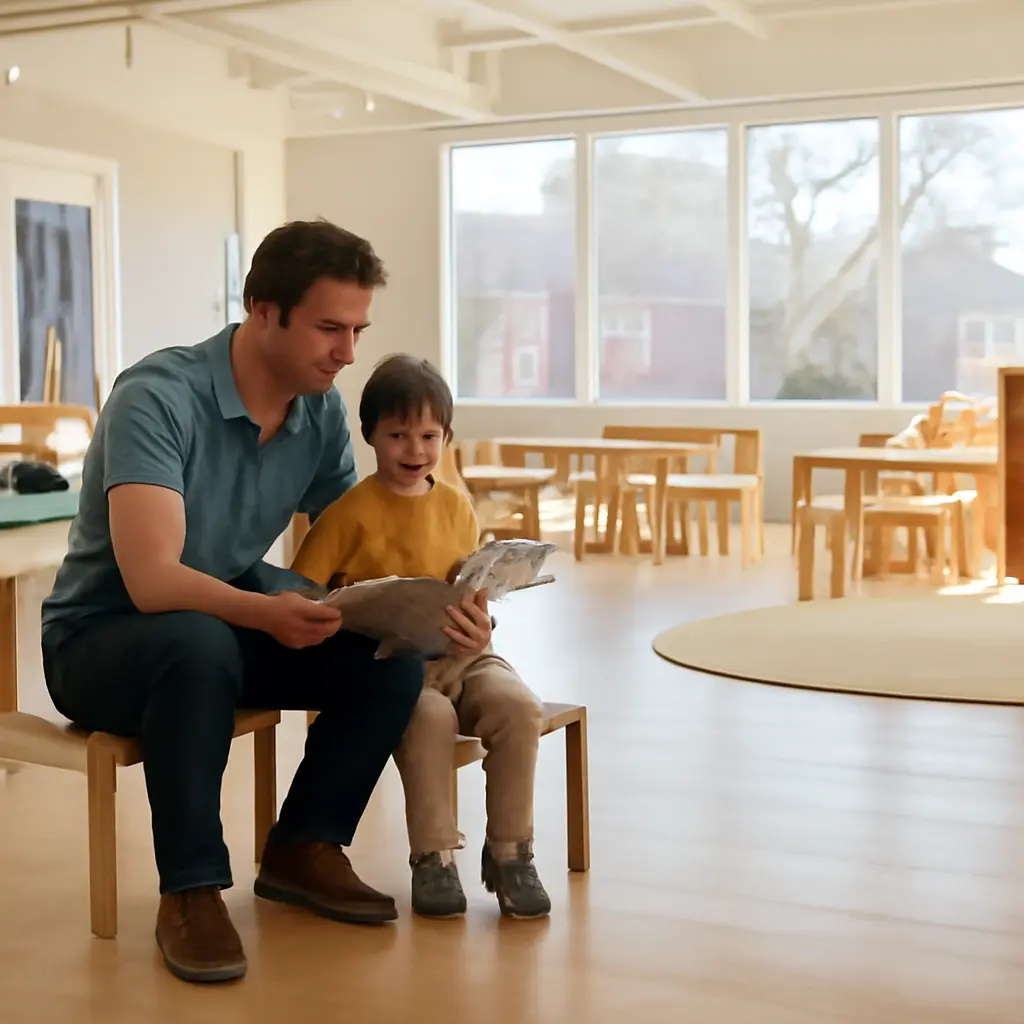
Growing up in two cultures means learning to make sense of family, community, and identity across different cultural worlds. Language exposure is more than vocabulary practice: it helps children communicate with relatives, participate in traditions, and build relationships, while supporting—rather than guaranteeing—language and literacy development. Research shows that children can learn more than one language, though their skills may differ by language, setting, and amount of use. Understanding how exposure works, what families can do, and what evidence says can help make bilingual upbringing more supportive and realistic.
Language exposure shapes growing up in two cultures
Language exposure is the range of opportunities a child has to hear, understand, and use a language in everyday life. It includes conversation, stories, play, school, media, and contact with relatives—not simply the number of hours a language is present in the room. The American Speech-Language-Hearing Association (ASHA) emphasizes that multilingual children learn languages through meaningful interaction, and that multilingualism itself does not cause a language disorder.
Exposure matters because culture is often carried through ordinary communication: family jokes, recipes, celebrations, advice, and stories. In the United States, about 22% of people age five and older spoke a language other than English at home in 2019, according to the U.S. Census Bureau’s American Community Survey. That figure describes home language use, not how many people are bilingual, but it illustrates how common multilingual family life is. A child’s experience also depends on which language is used with whom and whether the child has chances to respond.
Input means more than hearing a language
Language input is the language a child encounters; language output is what the child attempts to say or write. Both matter. A child who hears a heritage language at family gatherings but rarely speaks it may understand much more than they can produce. This receptive–expressive gap is common in bilingual development and is not, by itself, evidence of a problem. Researchers assess a child’s skills across languages and settings rather than judging ability from one language alone.
Exposure is connected to relationships and identity
A language can give children more direct access to grandparents, cousins, community members, and cultural knowledge. It may also help children feel that they belong in more than one social world. These benefits are not automatic: family relationships and cultural identity are shaped by many factors, including acceptance, shared experiences, and the child’s own preferences. Still, language can make participation easier and preserve connections that might otherwise depend on translation or interpretation.
Because exposure is both social and linguistic, the next question is how the amount and quality of input relate to children’s developing skills.
Language exposure influences bilingual development
Bilingual development is the process of acquiring and using two languages, whether simultaneously from early childhood or sequentially over time. ASHA describes multilingual development as a normal variation of language learning, not a disorder. Children may develop different strengths in each language because their opportunities differ—for example, one language may be used at home and another at school.
Exposure is important, but it should not be treated as a simple hourly quota. A 2017 study by Krista Byers-Heinlein and Casey Lew-Williams, published in the journal Developmental Science, reviewed evidence that infants can learn from exposure to more than one language. The practical lesson is not that every child needs an identical amount of each language; it is that consistent, engaging interaction provides useful learning opportunities.
Amount and quality of language input
Amount refers to how often a child encounters a language, while quality includes how responsive, varied, and meaningful the interaction is. Back-and-forth conversation, shared reading, and play invite children to interpret language and take turns using it. Passive background audio generally offers fewer opportunities to respond. The National Academies’ 2017 report, Promoting the Educational Success of Children and Youth Learning English, stresses that children’s development is shaped by their experiences across home, school, and community contexts.
Language balance changes across settings
Language balance means the relative opportunities and skills a child has in each language. It rarely stays fixed. A child may speak one language with parents, another with classmates, and both with siblings. Starting school can increase exposure to the school language, while visits with relatives or community activities can strengthen a heritage language. A temporary shift in vocabulary or confidence can reflect changing practice rather than loss of intelligence or capacity.
Mixing languages can be part of communication
Code-switching is the use of more than one language within a conversation or sentence. Children may switch languages because a word comes more readily in one language, because a listener shares both, or because the family routinely communicates that way. Linguists treat code-switching as a normal feature of multilingual communication, not proof that a child is confused. Adults can respond to the meaning of what the child says and model words in either language without turning every exchange into a correction.
The patterns of exposure help explain what children can do, but bilingual growth also depends on the opportunities families and institutions make available.
Family and community practices strengthen language exposure
A language-rich environment is one where children regularly encounter meaningful conversation, stories, and activities in a language. It does not require expensive programs or a parent who is formally trained to teach. The key is making interaction enjoyable and sustainable, while recognizing that families differ in time, resources, language confidence, and access to community support.
Everyday routines create repeated opportunities
Meals, errands, bedtime, cooking, and play can all become opportunities for conversation. Naming ingredients, telling a family story, asking a child what they noticed, or singing together gives language a purpose. Shared reading is particularly flexible: adults can discuss illustrations, connect the story to family experience, and read in whichever language feels natural. The goal is responsive communication, not perfect grammar or a rigid lesson plan.
Extended family and community provide real audiences
Children often have stronger reasons to use a language when it helps them connect with someone they care about. Regular calls with relatives, community gatherings, cultural events, and play with peers can provide that social purpose. These experiences also show that a language belongs in everyday life, not only in a classroom. If relatives and caregivers use different languages, families can treat that variety as an asset rather than requiring one person to represent an entire culture.
Schools can recognize and build on home languages
Schools influence language development through instruction, peer interaction, and their attitudes toward students’ home languages. The National Academies report recommends educational approaches that account for children’s language backgrounds and support learning across contexts. Families can ask whether a school has bilingual or dual-language options, how it communicates with multilingual caregivers, and how teachers distinguish language-learning patterns from possible speech or language disorders. Support for English does not require abandoning a home language.
These practices are most useful when paired with realistic expectations and an understanding of what bilingualism does—and does not—mean.
Common beliefs about bilingual children need context
Bilingualism describes the use or knowledge of two languages; it does not require equal fluency in every situation. Children’s abilities can be uneven, change over time, and reflect what they have needed to do in each language. Looking at the whole child’s communication is more informative than comparing one language with a monolingual standard.
“Two languages confuse children”
Research does not support the claim that exposure to two languages inherently confuses children or causes language delay. Bilingual children may mix languages, and they may know different words in different contexts. ASHA advises that multilingualism is not a cause of speech or language disorders. If a child has persistent difficulty communicating, assessment should consider all languages the child uses, with a qualified professional who understands multilingual development when possible.
“A child must speak both languages equally”
Equal ability is not a requirement for bilingualism. A child may be more fluent in the language used at school, while understanding family conversations in a heritage language. Skills can also be stronger in different areas: a child might tell stories in one language and discuss school topics in another. Families can support growth without turning language use into a test of identity or affection.
“Parents should avoid a language they speak imperfectly”
Parents do not need to provide flawless instruction for a language to be valuable at home. Warm, responsive interaction supports communication, and children can encounter additional language models through relatives, books, community programs, and schools. If caregivers are concerned about a child’s development, they can seek guidance without assuming that dropping a family language is the solution.
When families and educators understand these distinctions, they can focus on practical support rather than myths about language mixing or perfect balance.
Conclusion: make language part of belonging
Language exposure matters because it gives children repeated chances to understand, communicate, and take part in family and community life. The amount and quality of input, changing language balance, and normal code-switching all help explain bilingual development. Everyday routines, extended-family connections, and inclusive schools can make both languages useful and valued. For families, a practical next step is to choose a few enjoyable ways to use each language regularly—such as a shared story, a weekly call, or a community activity—and build from there. Language is not a measure of how “authentic” a child is; it is a resource for connection that can grow over a lifetime.
Sources: U.S. Census Bureau, 2019 American Community Survey, “Language Spoken at Home,” https://data.census.gov/; American Speech-Language-Hearing Association, “Learning More Than One Language,” https://www.asha.org/public/speech/development/learning-more-than-one-language/; Byers-Heinlein, Krista, and Casey Lew-Williams, “Bilingualism in the Early Years: What the Science Says,” Developmental Science, 2017, https://pmc.ncbi.nlm.nih.gov/articles/PMC6168212/; National Academies of Sciences, Engineering, and Medicine, Promoting the Educational Success of Children and Youth Learning English: Promising Futures, 2017, https://nap.nationalacademies.org/catalog/24677/promoting-the-educational-success-of-children-and-youth-learning-english